What is it about abandoned places?
Why do some people find them fascinating and mysterious - places they want to explore- while others wouldn't dream of spending time looking at them.
I've been fascinated by abandoned places for as long as I can remember - old factories, houses, ghost towns, forgotten structures - you name it. Perhaps that's partly because I'm an explorer by nature. Few things appeal to me more than simply grabbing my camera and seeing where the day takes me.
That's one of the things I've always loved about photography. A camera gives me a reason to go somewhere new, but more importantly, it gives me a reason to slow down and really look once I get there.
A photographer friend of mine once put it perfectly: “A camera is a good excuse to go out and explore.”
Abandoned places seem particularly suited to that kind of exploration. They're filled with questions. What happened here? What remains? What has changed? What happens to a place after people leave and weather, vegetation and time begin to take over?
In this essay, I'll touch on some of that mystery, but I'm particularly interested in something else: the artistic possibilities these places offer a photographer - the opportunities to work with light, shadow, color, texture, shape and the visible passage of time.
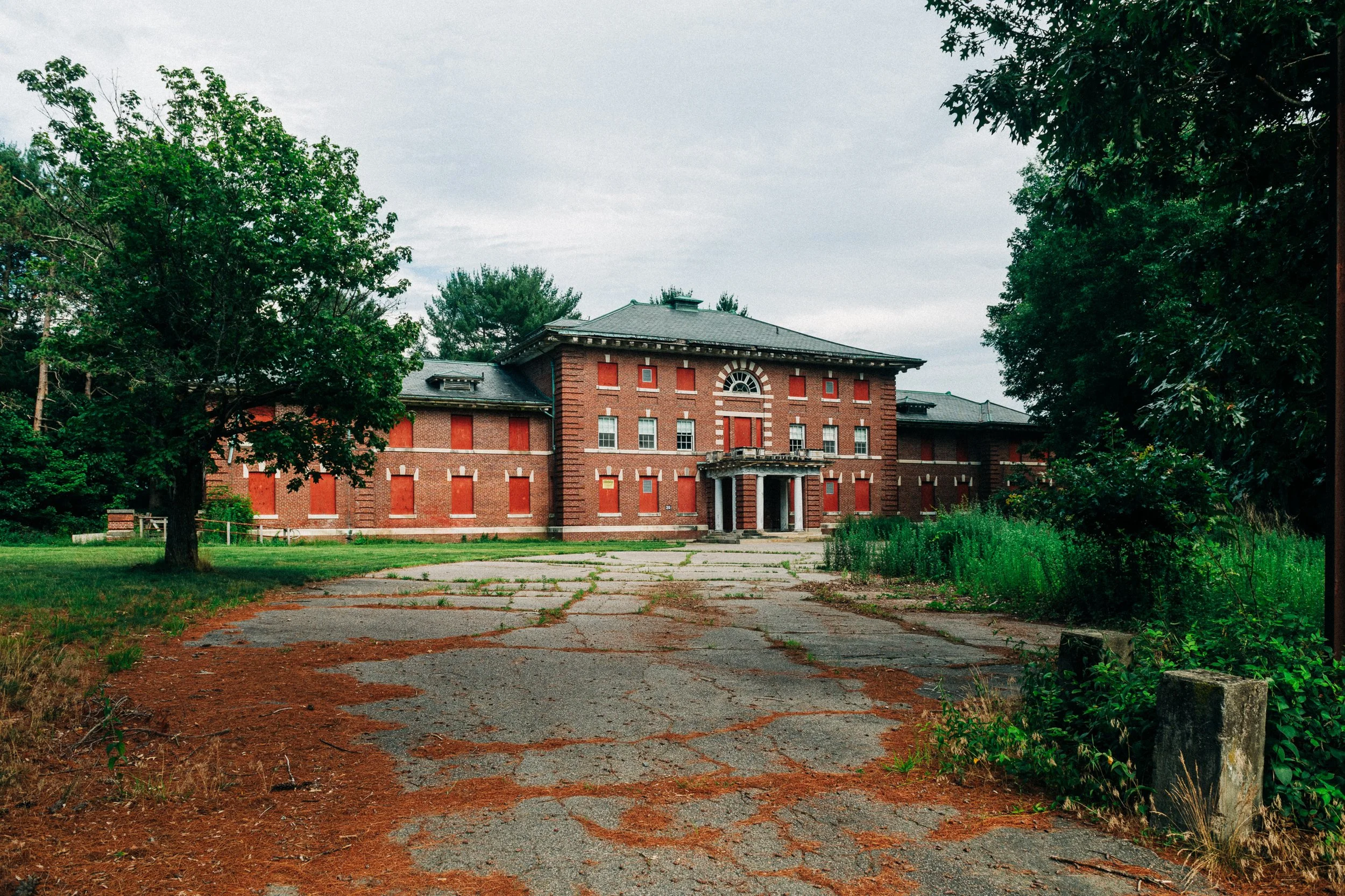
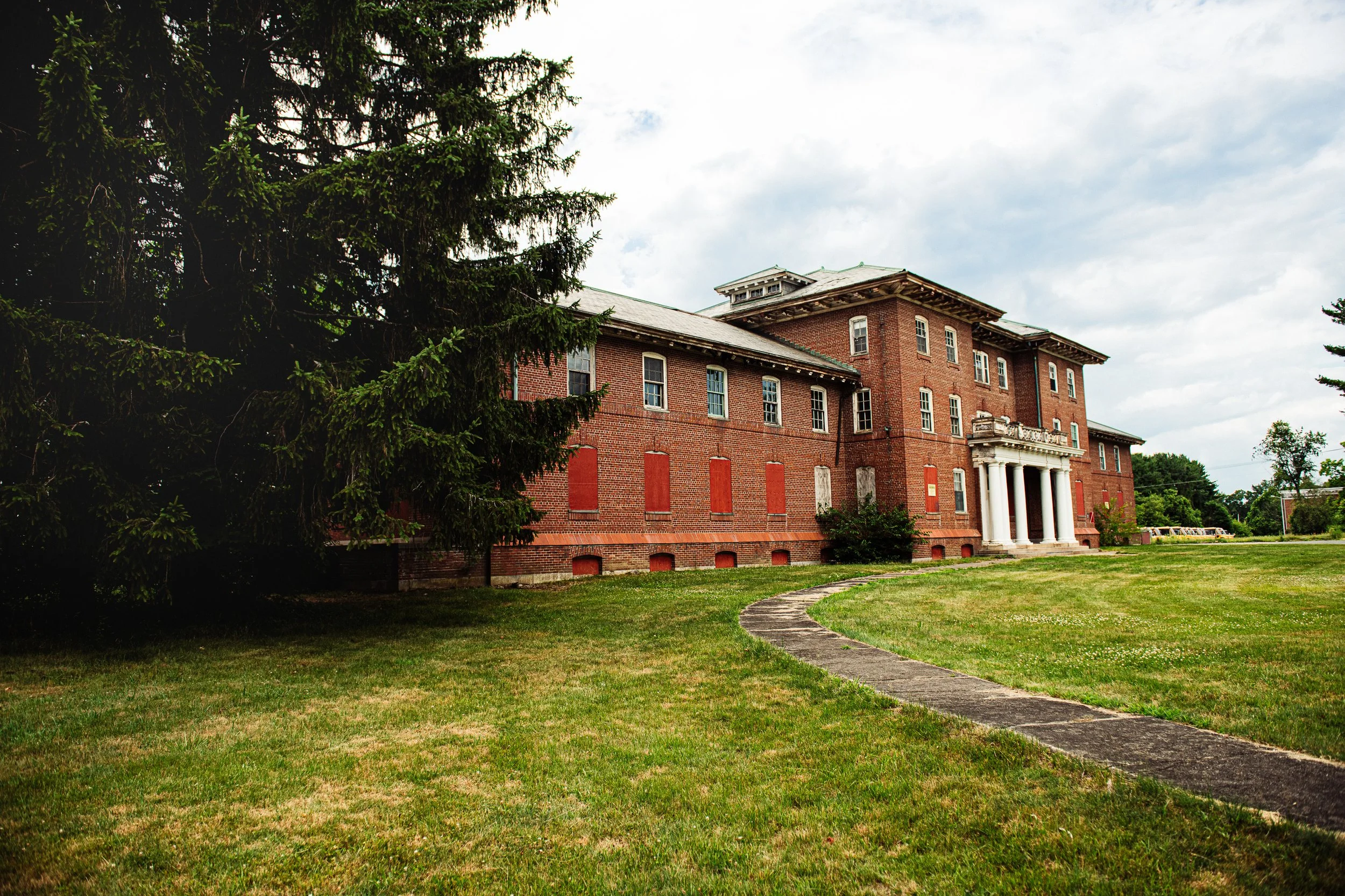
That curiosity is what brought me, camera in hand, to the former Medfield State Hospital.
I visited the grounds three times over the course of the summer. At first, I thought I was photographing abandoned buildings.
But as I spent more time walking the grounds, I realized that the buildings themselves were only part of what interested me. I was becoming increasingly drawn to what had happened around them: the way sunlight moved across boarded windows, the way vegetation pressed against brick and concrete, and the way familiar architectural forms had been transformed simply by time and disuse.
A Place Built for People
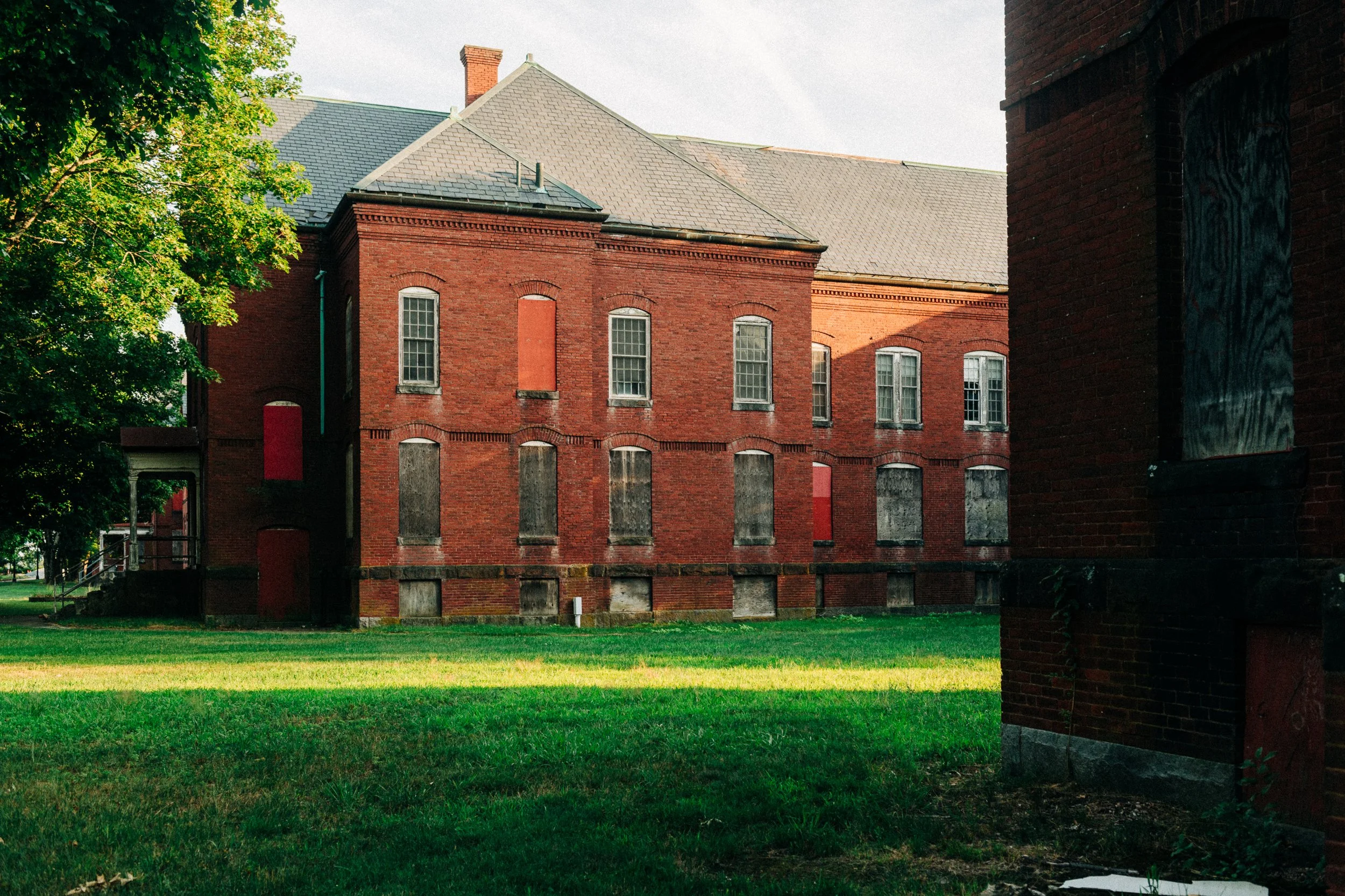
Medfield State Hospital opened in 1896. For its first 18 years, it primarily received patients transferred from other Massachusetts state hospitals as a way of relieving overcrowding. In 1914, its role changed when it became an admissions and treatment center, receiving patients directly from the community.
By 1952, the hospital had reached a peak population of approximately 1,500 inpatients. Over the decades that followed, changing approaches to mental-health treatment - including new medications, rehabilitative treatment models and an increasing emphasis on community-based care—contributed to a dramatic decline in the hospital population. The last patients left in April 2003, bringing 107 years of operation to an end. Today, although it is prohibited to enter the buildings, the public is free to walk the site and view the buildings from dawn to dusk.
Those facts provide historical context. But walking through the grounds today, history is experienced somewhat differently.
It is experienced through space.
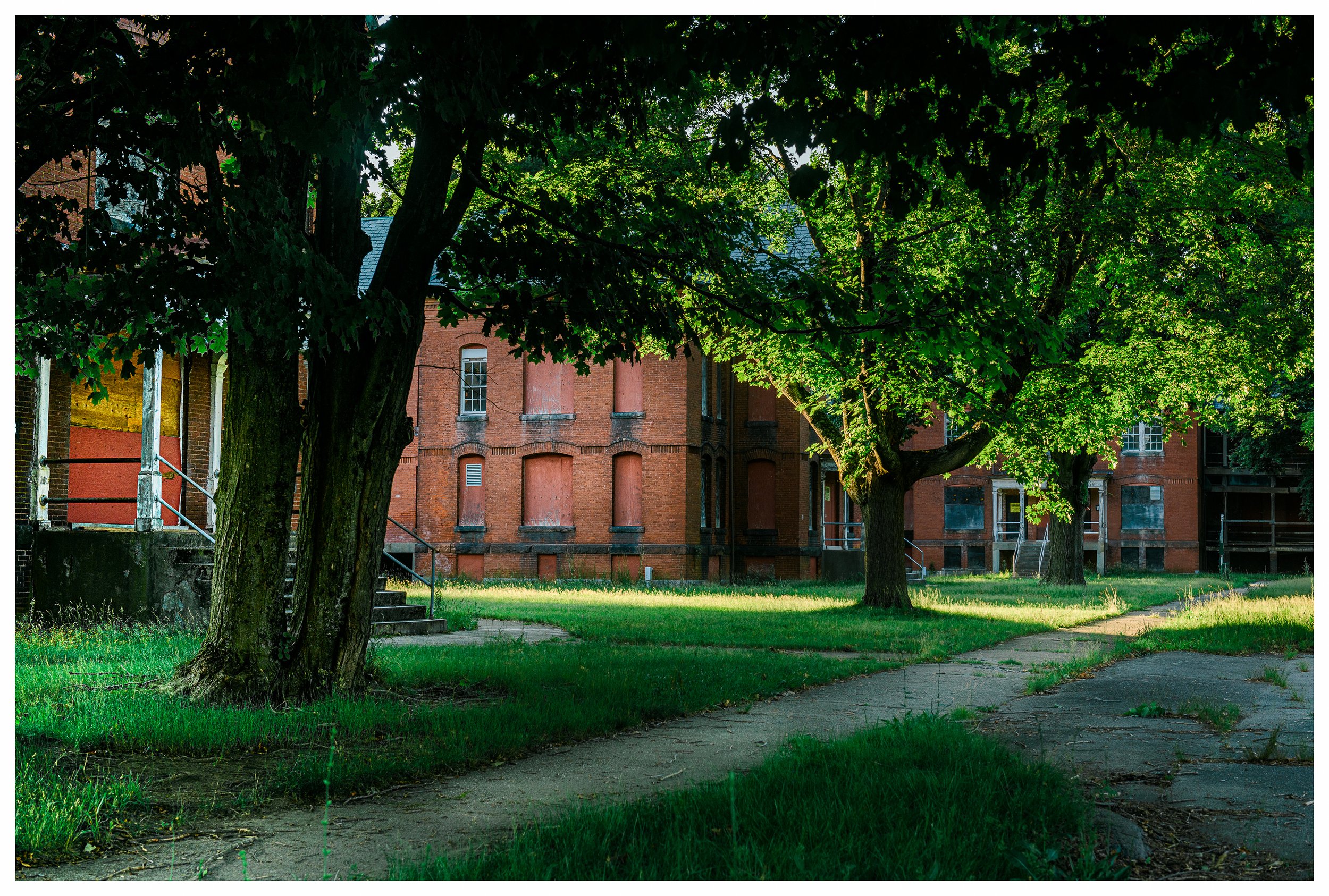
Paths still led from one building to another. Stairs still rise toward entrances. Windows repeat across long brick façades. Large trees shade lawns that once belonged to an active hospital campus.
The physical structure of the place remains, while the activity for which it was designed has disappeared.
That contradiction became increasingly important to me as I photographed.
What Absence Looks Like
There is an obvious temptation when photographing an abandoned place to emphasize what makes it look abandoned—to search for broken windows, dark doorways, collapsing structures and other signs of decay. Those photographs can certainly be compelling.
But I began to wonder whether there was another way to photograph this place.
What interested me was quieter.
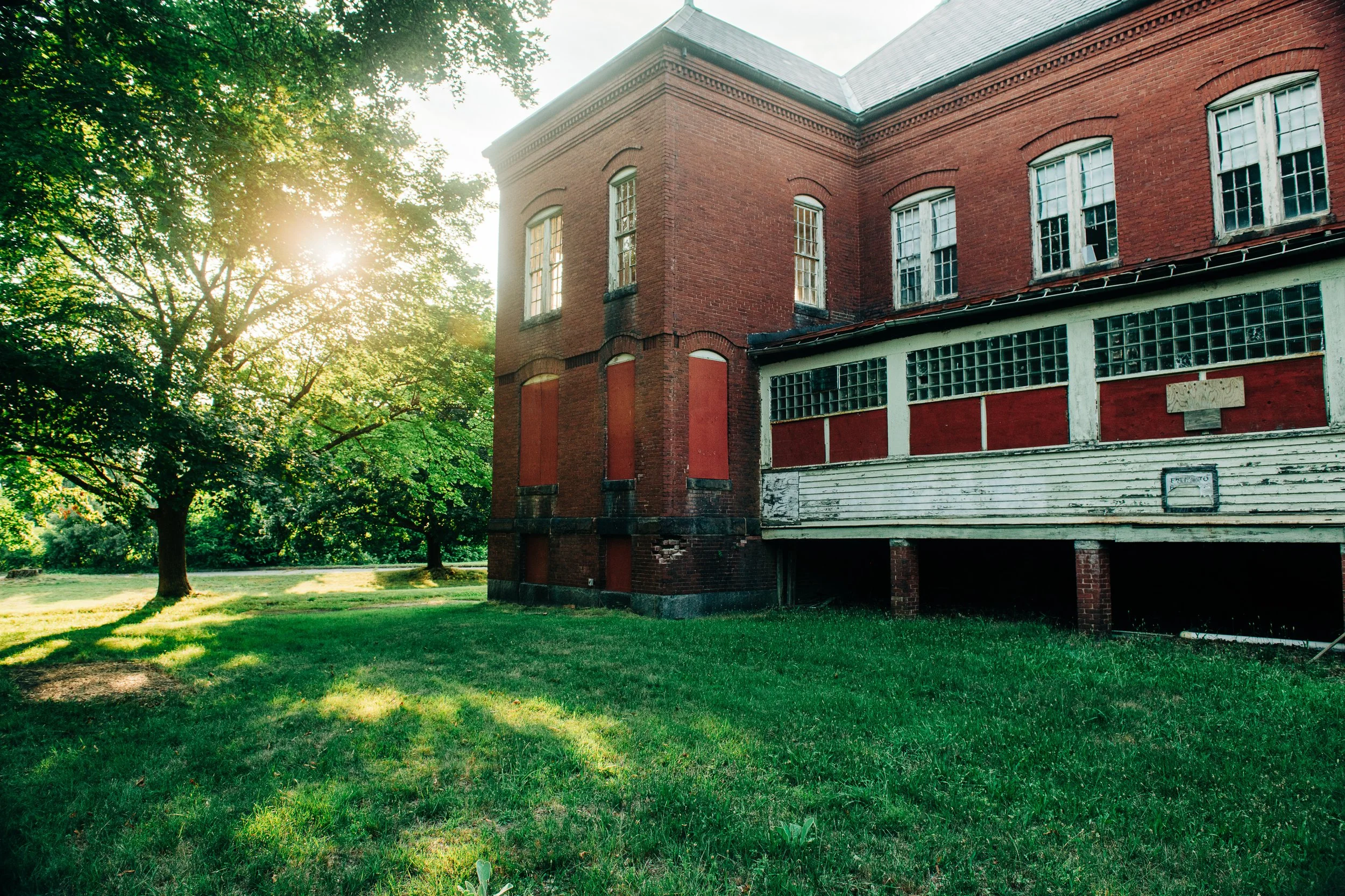
Late in the day, sunlight would slip between the trees and briefly illuminate part of a building while everything around it remained in shadow. A boarded window could become a field of color. Weathered brick, faded paint, moss and vegetation began to feel less like evidence of neglect and more like layers recording the passage of time.
The longer I photographed, the less I found myself looking for “abandoned buildings” and the more I found myself looking for light, color, texture and relationships.
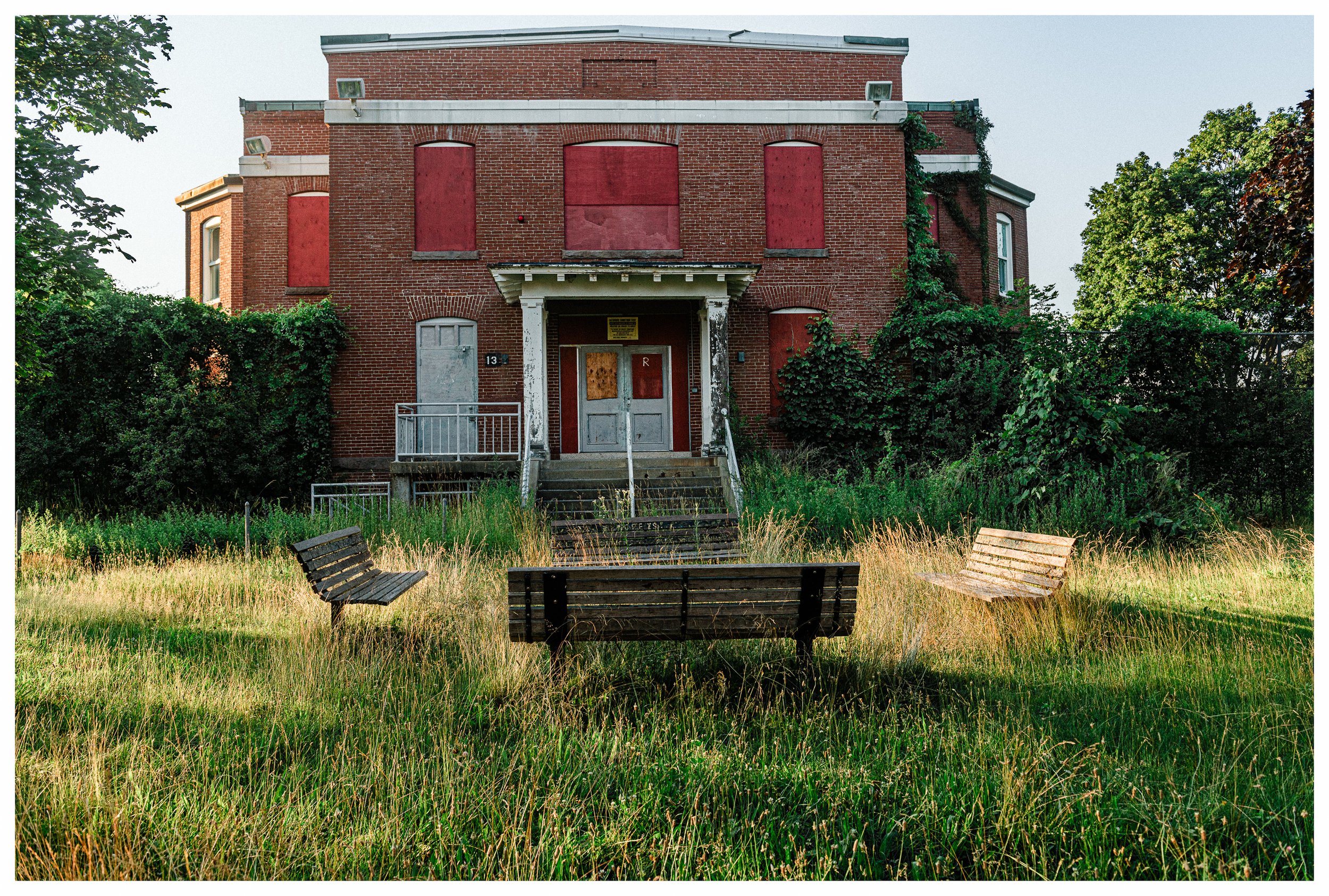
There are reminders everywhere that these spaces were designed around people—entrances, stairs, porches, pathways, windows and benches.
Yet the people themselves are absent.
That absence changes the way ordinary objects register in a photograph. An empty bench in an active park may barely attract our attention. Empty benches sitting in tall grass before a shuttered building suggest something entirely different.
I don't need to know who once sat there, or even whether these particular benches occupied these exact positions when the hospital was operating. For me, their power comes simply from their presence in a landscape now defined by absence.
Nature Doesn’t Know a Place is Abandoned
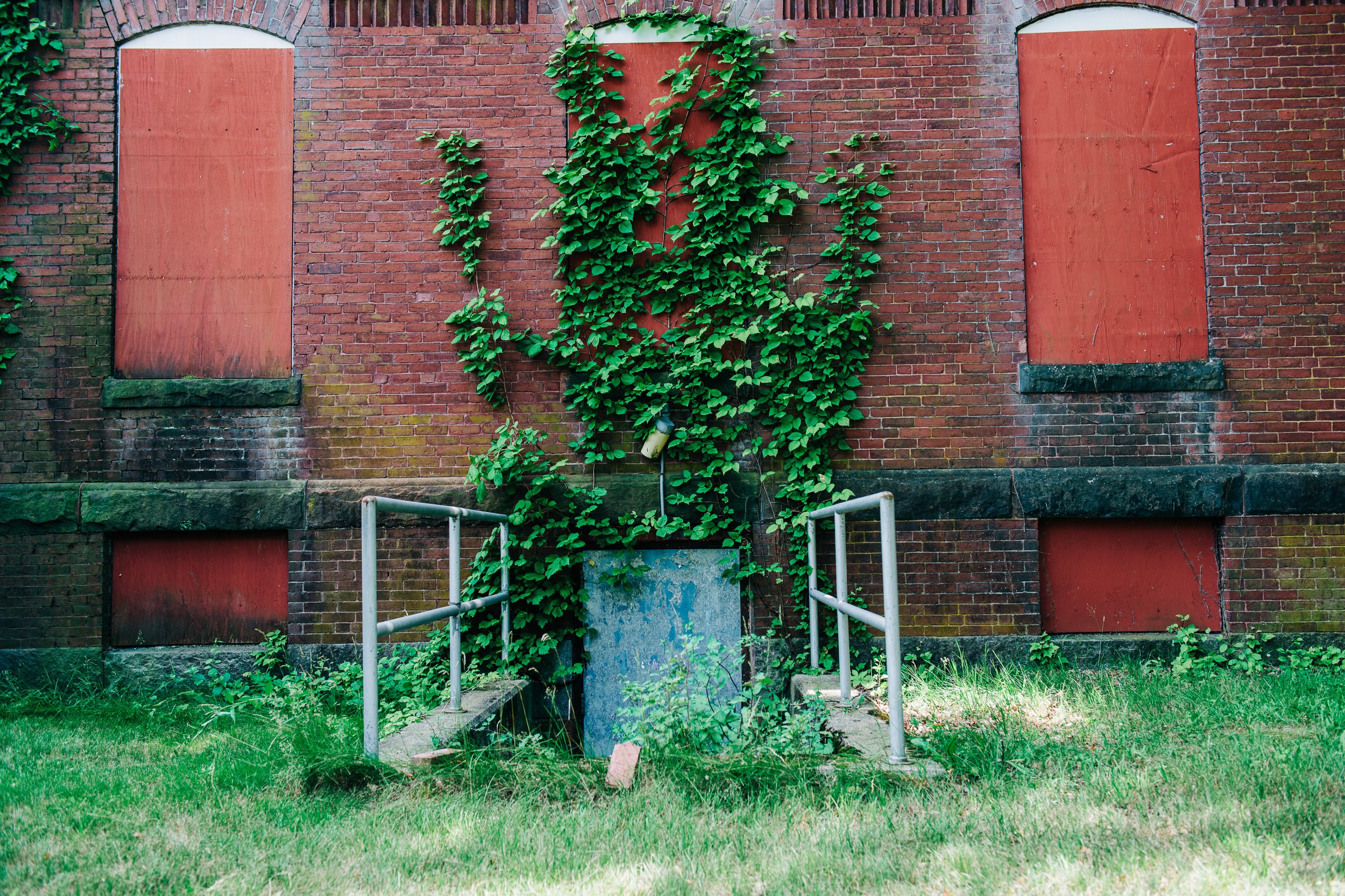
Nature, of course, doesn't recognize abandonment.
Vines climb walls. Moss settles into concrete steps. Grass pushes through pavement. Trees cast afternoon shadows across boarded windows just as they once cast shadows across open ones.
There is something strangely beautiful about that indifference.
The buildings may no longer serve the purpose for which they were constructed, but the landscape surrounding them continues to change. Architecture attempts permanence; nature works on a different timetable.
Here the two have begun to overlap
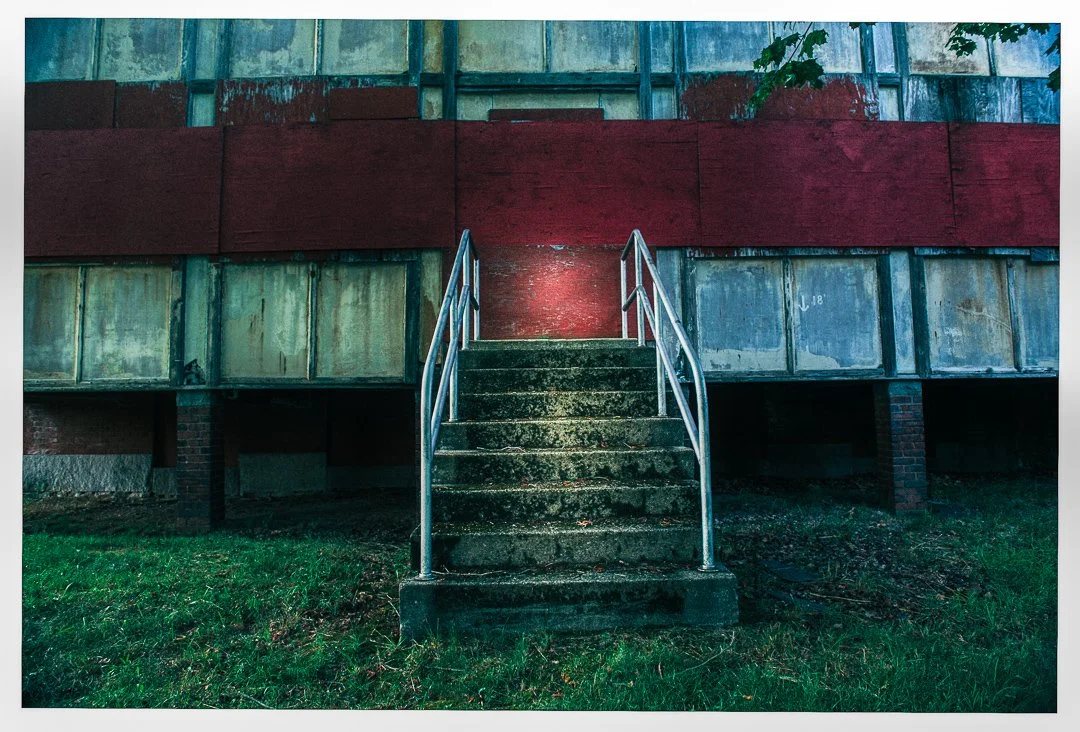
Stairways were another feature I kept returning to.
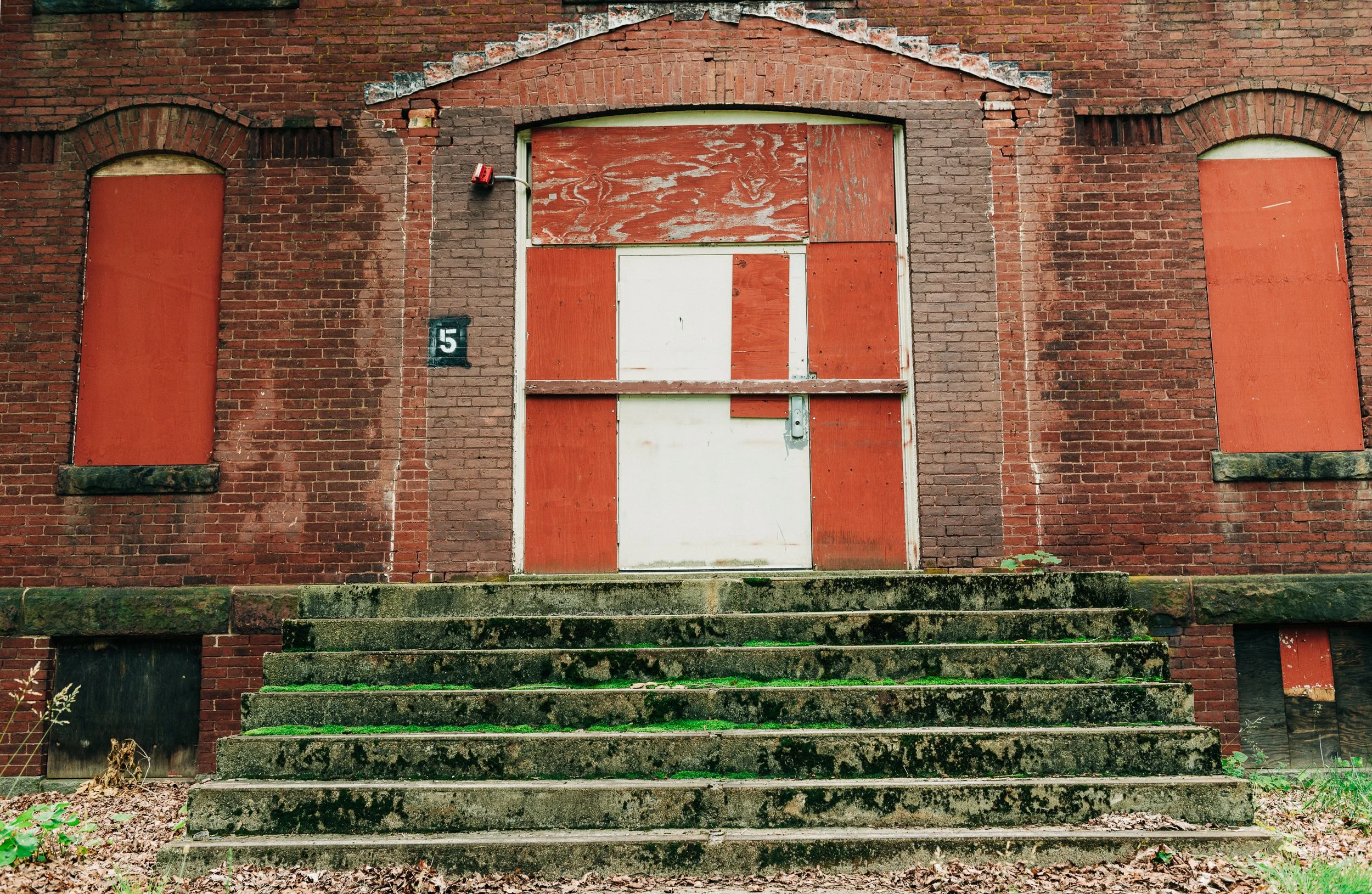
A staircase is ordinarily an invitation. It tells us where to go. It connects one place with another and directs us toward an entrance.
At Medfield, many of those visual invitations end abruptly.
The stairs remain. The destination does too. But access has been removed.
That made photographing from outside feel less like a limitation and increasingly like part of the subject itself. I wasn't exploring these buildings. I was observing them from the same position available to anyone walking the grounds - close enough to study their surfaces but separated from the lives and spaces that once existed behind them.
It’s All About the Light
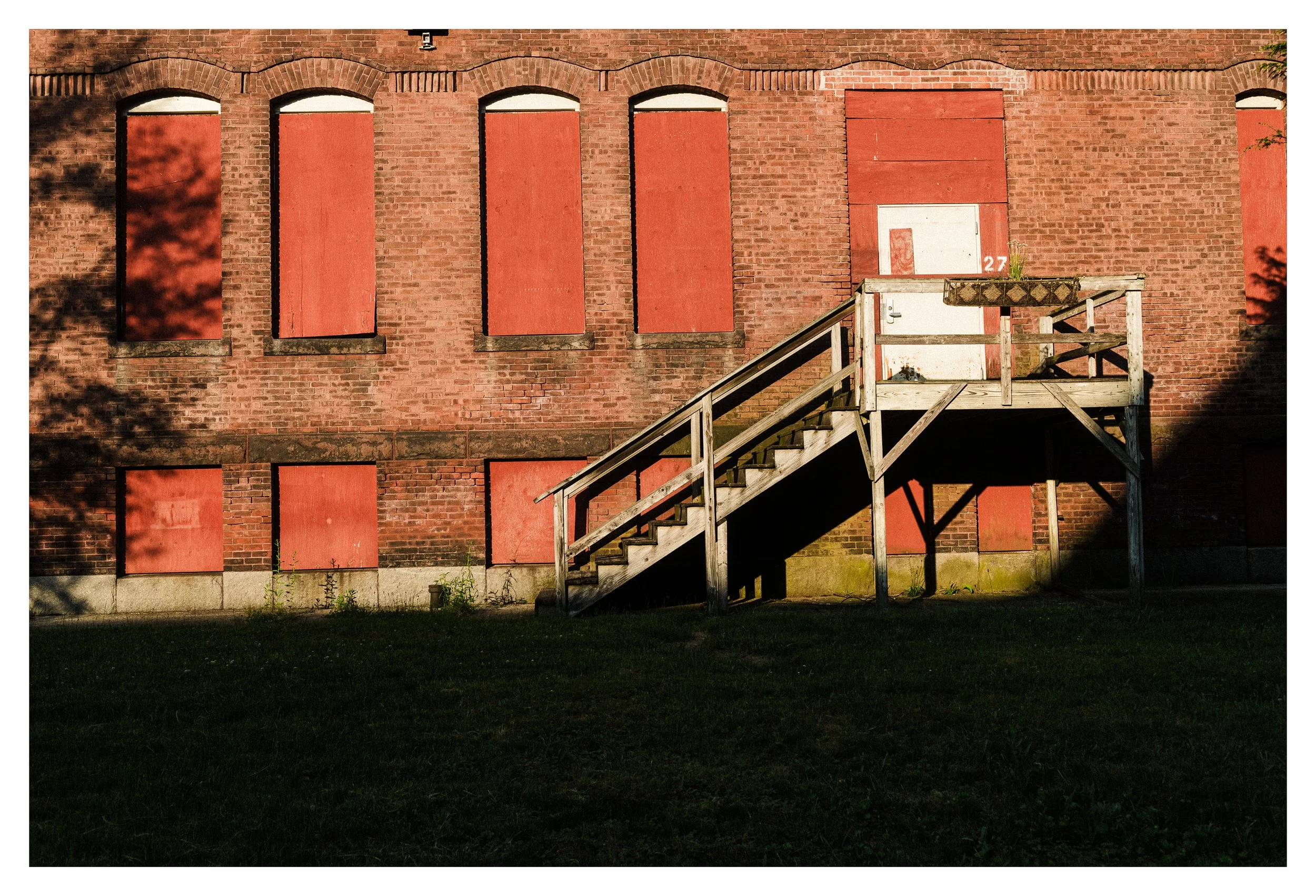
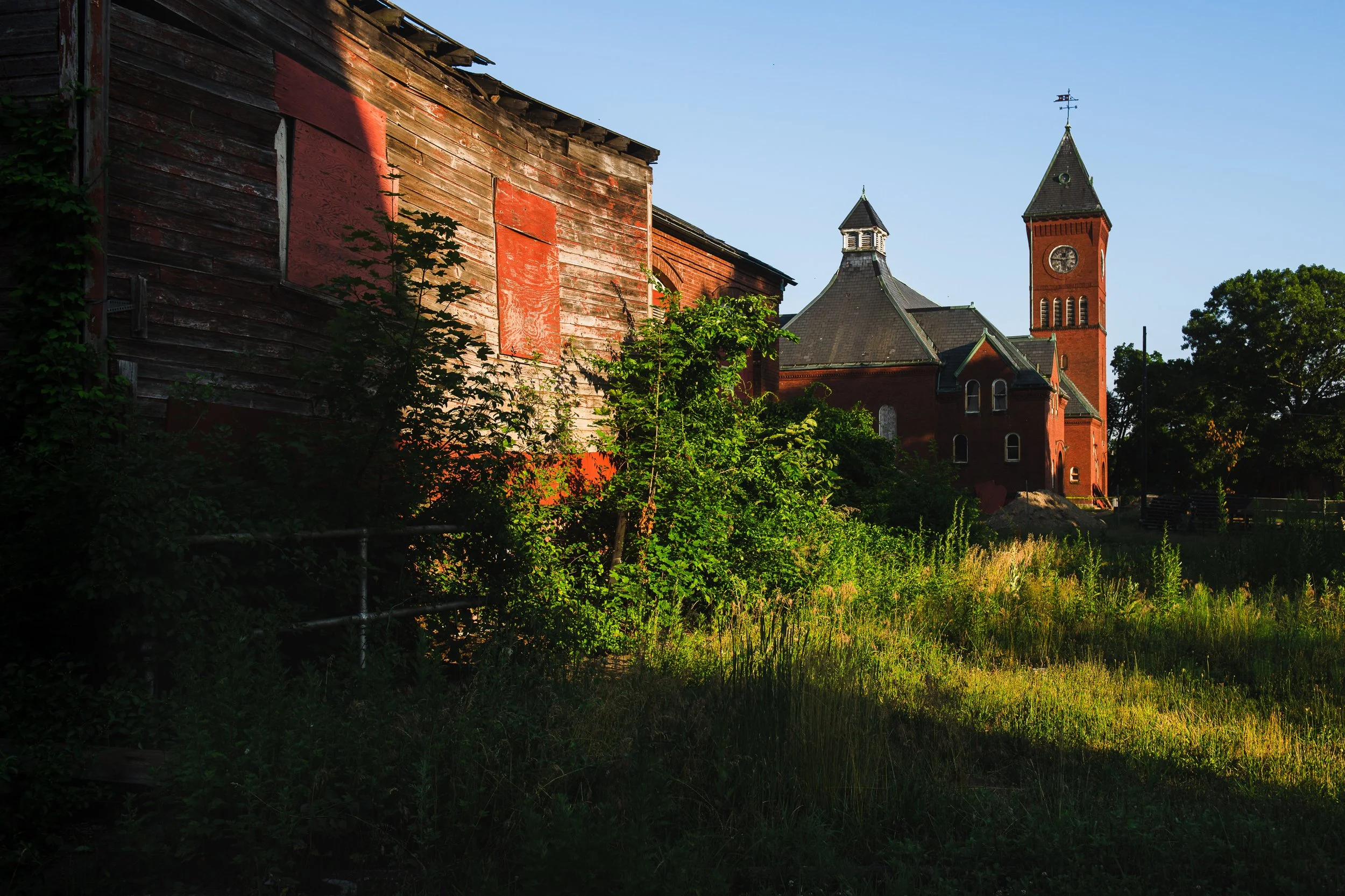
As a photographer, I'm attracted to shadow, weather, texture, patterns and places that carry a sense of time. But one key element stands out - It's what the light is doing and what a particular place gives me to work with.
At Medfield, sometimes that meant deep shadows. At other times it meant brilliant late-afternoon sunlight, saturated color or hard light.
And perhaps that's another form of exploration.
The more time I spent there, the less interested I became in making photographs that simply said abandoned hospital. I began making fewer photographs of entire buildings and started isolating pieces of them.
A staircase became a diagonal cutting across brick lit by hard light. Repeating windows became patterns. Boards covering doors and windows became rectangles of muted red. Shadows divided walls into areas of light and darkness.
The architecture was beginning to lose some of its identity as architecture.
When Architecture Becomes Abstraction
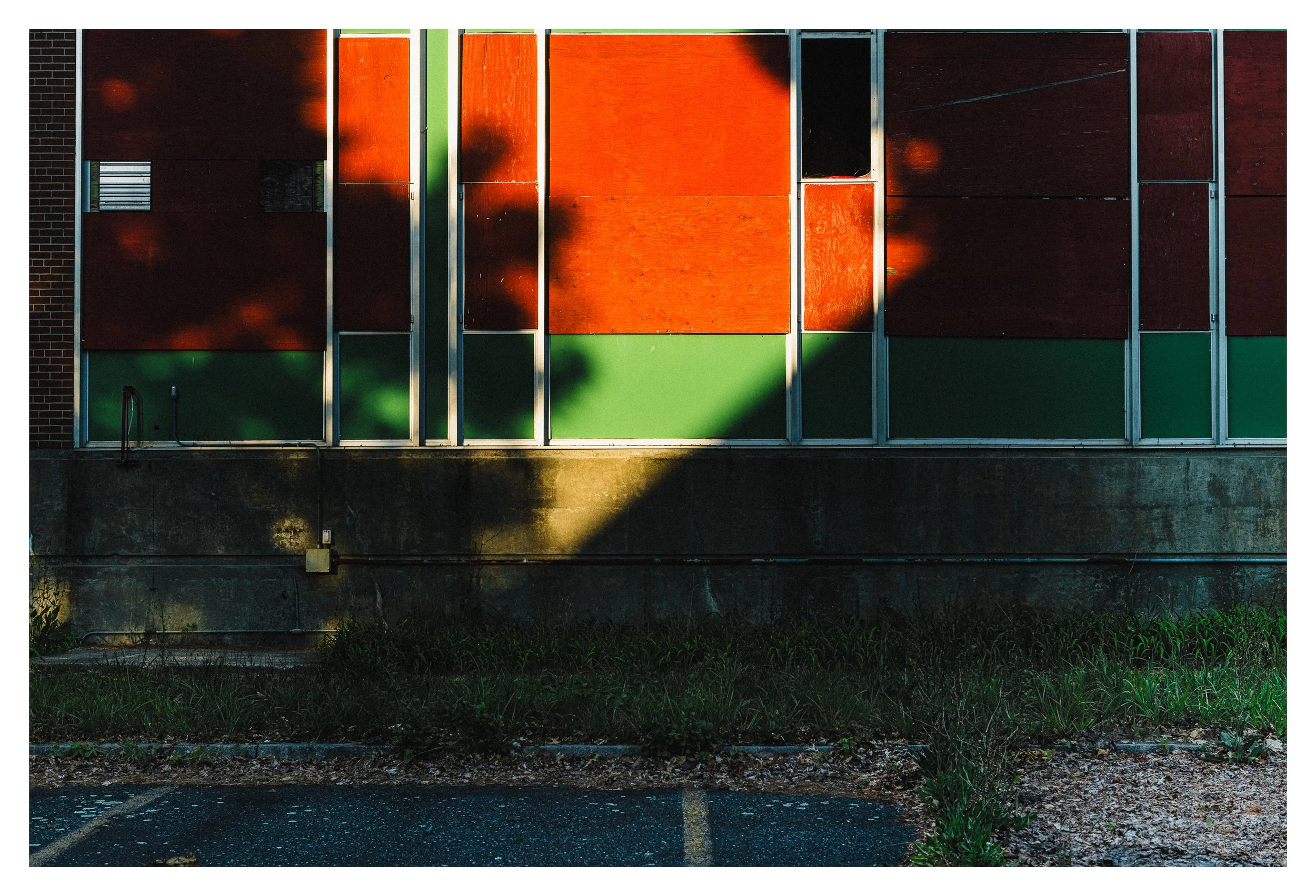
In one of my favorite examples, late sunlight transformed an otherwise ordinary section of a boarded façade into blocks of orange, red and green separated by lines of metal and shadow.
At that point I wasn't really photographing a hospital anymore.
I was photographing shape, color and light.
This is one of the things I find most compelling about photography. A camera can describe a place, but it can also detach us from our assumptions about that place.
Once we stop asking What is this? and begin asking What am I actually seeing? Familiar objects can become something entirely different.
Perhaps that's why I resist thinking of photography in terms of a single style. The exploration doesn't end when I arrive at a new place. In many ways, that's when it begins.
Beauty and Deterioration
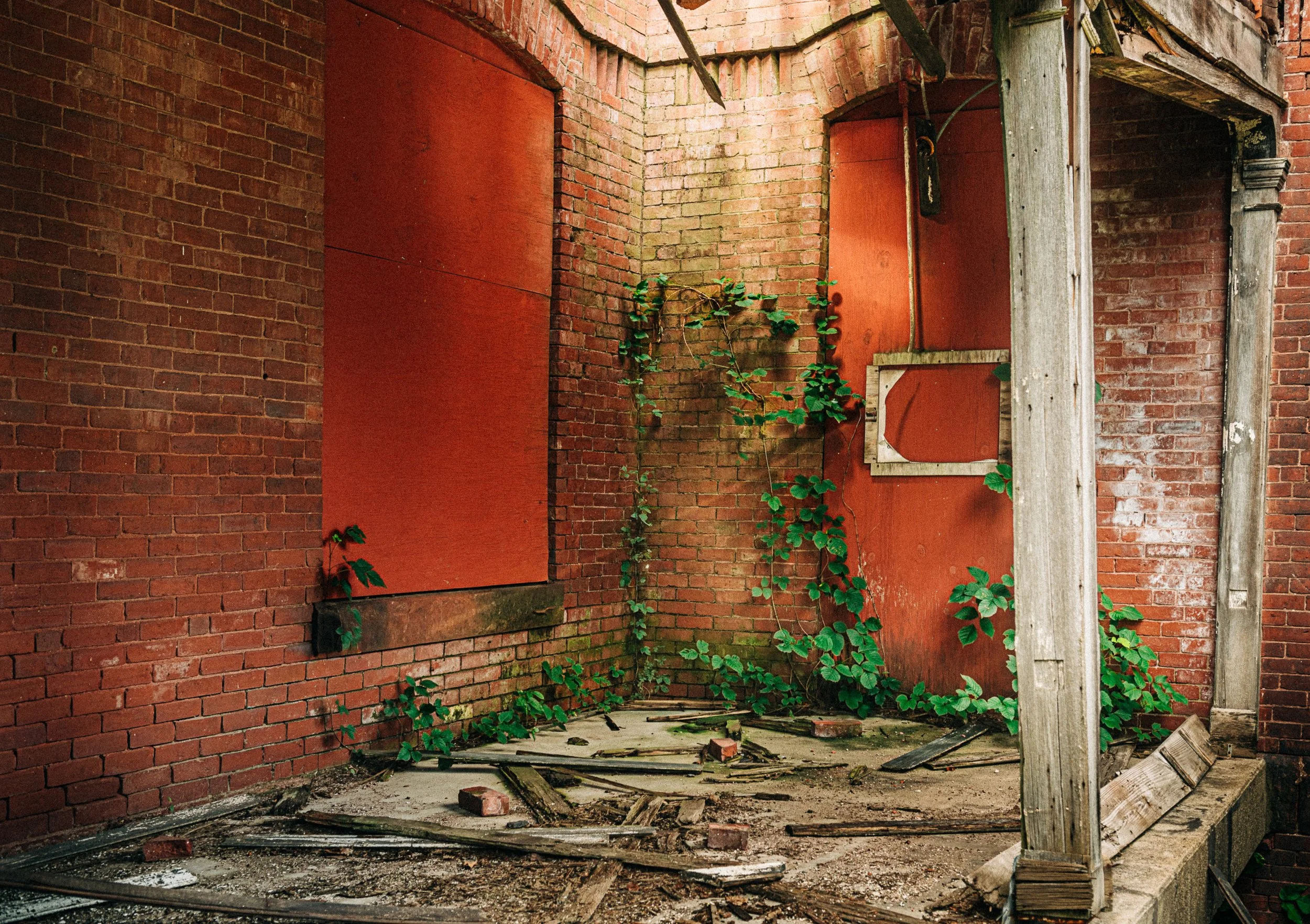
Calling something like this beautiful can be complicated.
The deterioration is real. Wood rots. Paint fades. Masonry stains. Vegetation moves into spaces that were once carefully maintained.
And this was not simply an architectural complex. It was a psychiatric hospital in which generations of people lived, worked and received treatment. That history deserves more than being reduced to an atmospheric backdrop for photographs.
So, when I use the word beauty, I don't mean that abandonment itself is beautiful.
I mean something narrower—and, for me, more interesting.
Photography allows us to separate momentarily what something is from how it looks.
A weathered wall can contain extraordinary color. A deteriorating porch can become a study in texture and geometry. A vine crossing a boarded doorway can create a composition no architect ever intended.
The beauty isn't necessarily in the abandonment.
It is in what time reveals.
Time
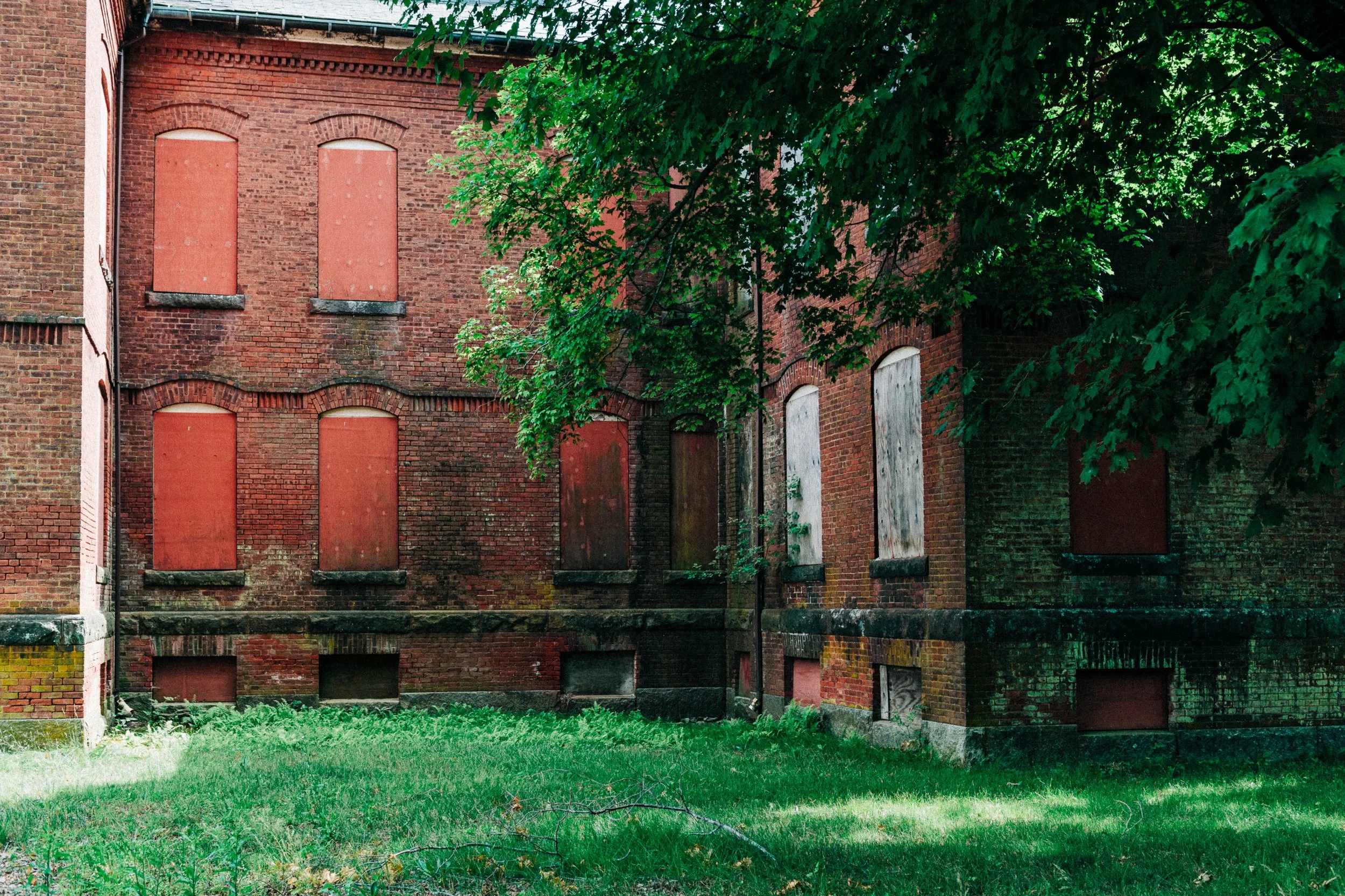
By my later visits, I found myself drawn to scenes in which it became difficult to tell where one subject ended, and another began.
Brick disappeared into shadow. Green vegetation reflected onto aging surfaces. Tree canopies changed the color of entire sections of buildings. Moisture, moss, wood, masonry and leaves seemed to become part of the same visual vocabulary.
Nothing dramatic needed to happen.
That may have been the biggest change in the way I photographed Medfield.
I stopped looking for photographs that announced, this place is abandoned.
I began looking for quieter photographs that simply asked the viewer to spend a little more time looking.
And perhaps that brings me back to the question I started with: What is it about abandoned places?
For me, I think part of the answer lies here.
Abandonment doesn't stop a place from changing. It changes what causes the change.
Once people leave, weather, vegetation, light and time become the architects.
Departure
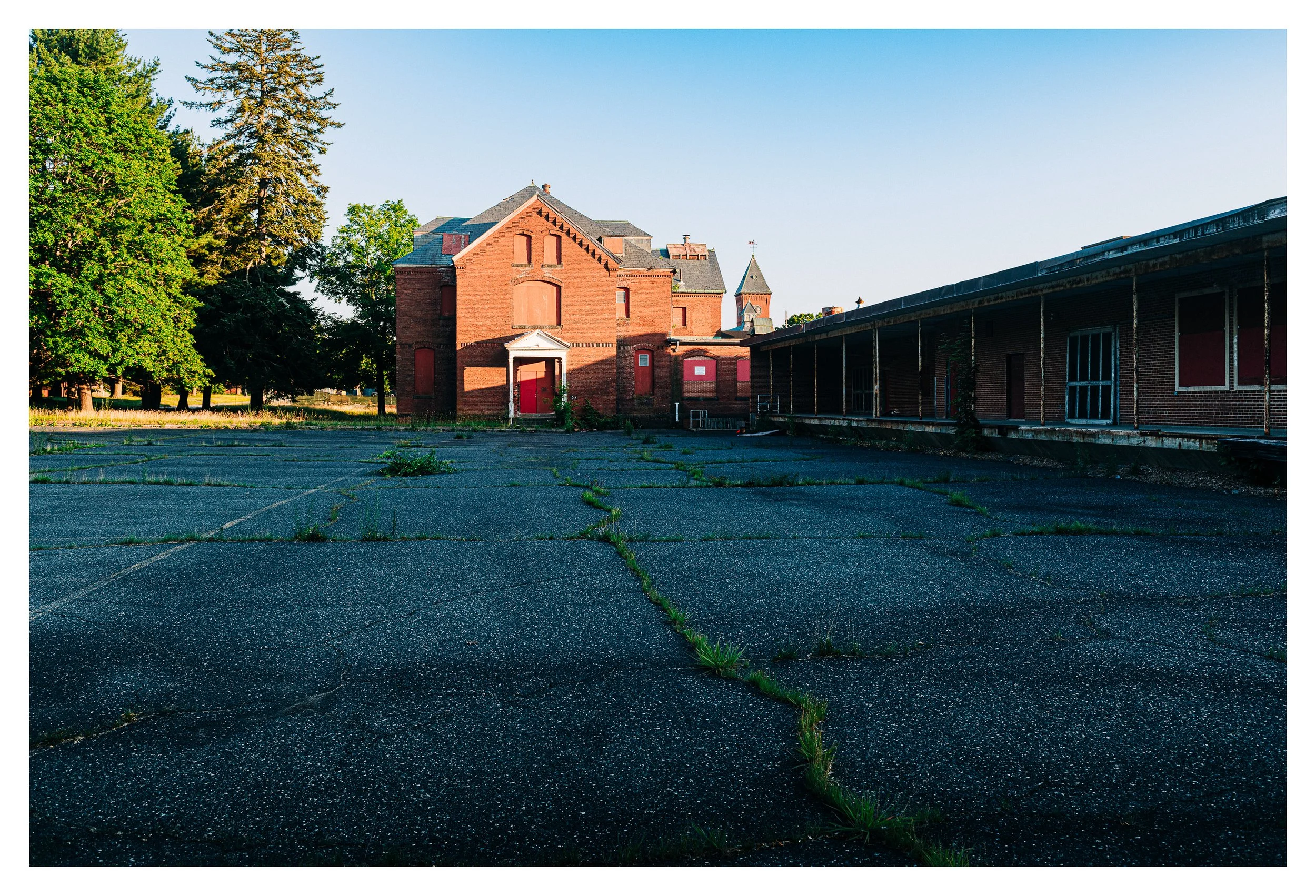
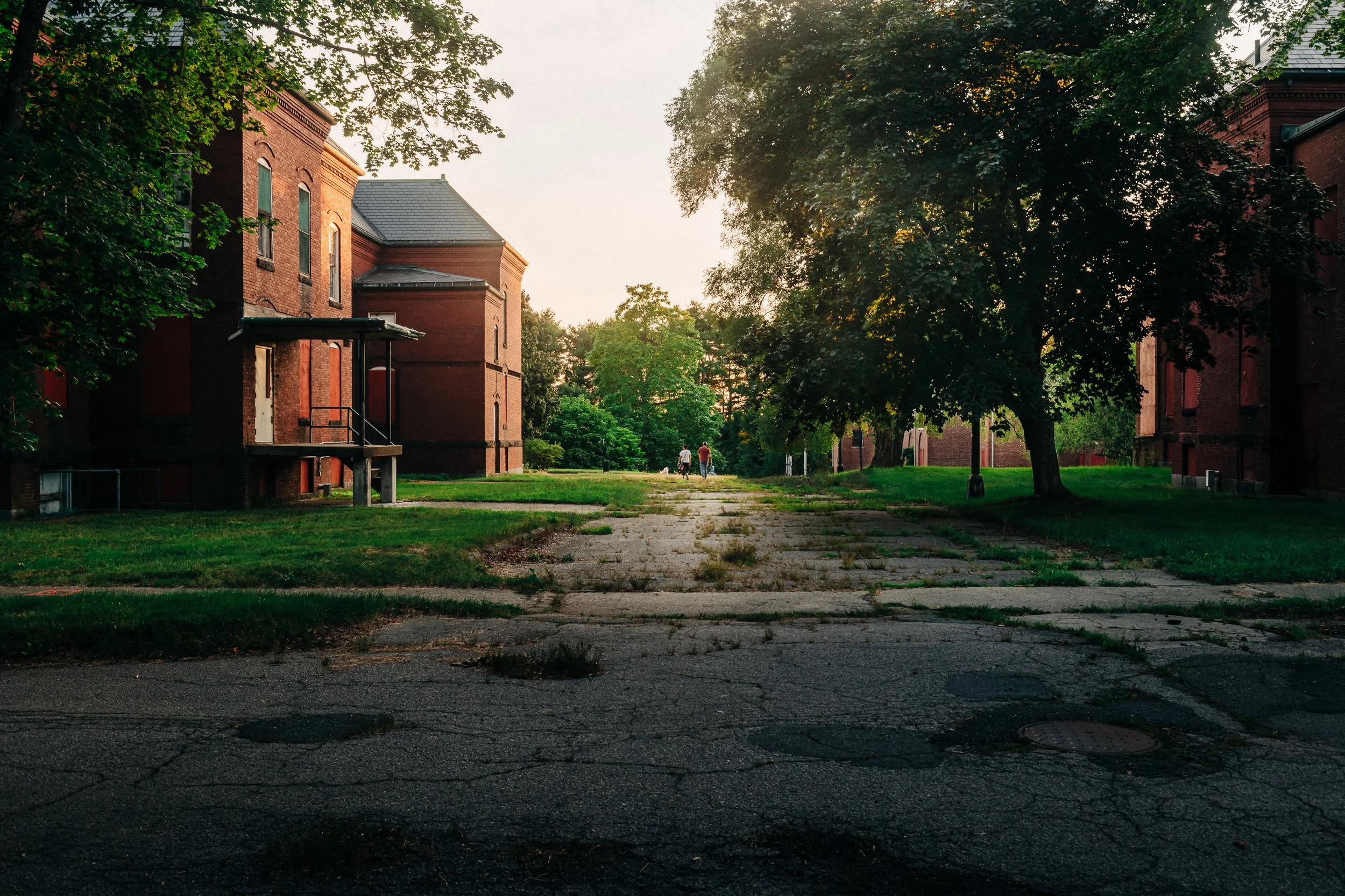
On each visit, eventually I put the camera away and walked back across the grounds.
The buildings remained behind—enormous, silent and strangely beautiful.
Places like this inevitably change. Buildings are preserved, repurposed, altered or lost. Vegetation continues growing. Surfaces weather. What we encounter today is only one moment in a much longer history.
Photography can't stop that.
But it can preserve the experience of standing there at a particular moment—when late-afternoon light crossed an old brick wall, when grass emerged through a forgotten stretch of pavement, or when a building that had outlived its original purpose became, briefly, something else entirely.
I began this project thinking I was photographing abandonment.
I left feeling that I had been photographing time.